
What Is an EI30 Fire-Rated Door?
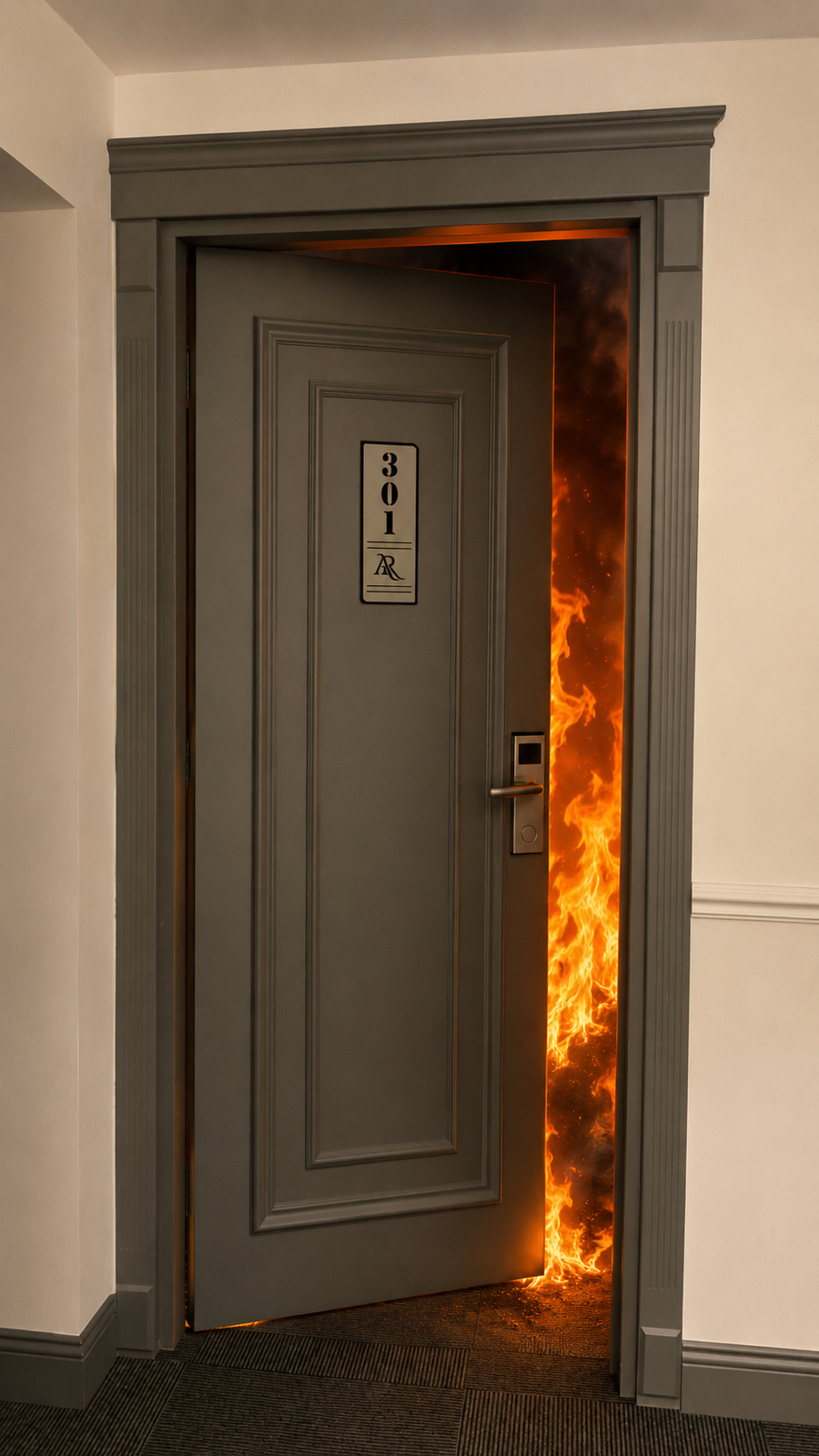
Fire safety is one of the most important aspects of building design, especially in hotels, dormitories, hospitals, offices, public buildings, residential projects and other places of public use. Limiting the spread of fire and heat to other parts of a building for a set period gives people time to evacuate safely and gives the fire brigade time to respond.
EI30 is one of the fire-resistance classifications. It states that a door or building element maintains specific performance criteria under fire exposure for at least 30 minutes.
What does EI30 mean?
The letters “E” and “I” in the EI30 class refer to different performance criteria:
- E – Integrity: limiting the passage of flames and hot gases to the other side of the door.
- I – Insulation: keeping the temperature rise on the unexposed face within defined limits.
- 30: this performance is maintained for 30 minutes within the scope of the classification.
An EI30 fire-rated door is therefore not simply a door that resists burning. The door has to be designed to deliver a defined fire performance together with its leaf, frame, seals, hinges, lock, closer and other components.
Where are EI30 fire doors used?
Depending on the building’s fire-safety strategy, EI30 fire-rated doors can be used in many areas, in particular:
- Hotels
- Student dormitories
- Hospitals and healthcare buildings
- Offices
- Residential and apartment projects
- Public buildings
- Stairwells and escape routes
- Technical rooms
- Corridors
- Places of public use
as part of the building’s fire compartmentation.
The required fire-resistance class should not be chosen on the basis of door preference alone. The building’s use, fire scenario, applicable regulations, project requirements and fire-safety design must all be considered together.
Why is the door leaf alone not enough?
The performance of a fire-rated door does not depend only on the material of the leaf. Within the door system,
- the door leaf
- the frame
- intumescent seals
- hinges
- the lock and strike
- the door closer
- fire-resistant glass, if glazed
- other fixings and installation components
must be assessed as a whole.
A door being “made from fire-resistant material” does not on its own mean that it is EI30. Fire performance must be assessed on a door system that has been tested and properly classified.
What is the difference between EI30 and EI60?
The main difference between EI30 and EI60 is the classified duration of fire performance.
- EI30: 30 minutes
- EI60: 60 minutes
It is not correct to assume that “EI60 is always better”. The class a project needs should be determined by the building’s fire-safety design and the applicable requirements.
EN 1634-1 and EI30
The EN 1634-1 standard (TS EN 1634-1 in Türkiye) is a key reference for assessing the performance of fire-resistant doors and door sets. It defines the methods for testing the fire resistance of doors, door sets and similar components.
For a product sold as EI30, it is therefore important to look beyond the marketing claim: check the system and configuration in which it was tested and the relevant test and classification documents.
What to check when choosing an EI30 fire door
When selecting an EI30 door for a project, consider the following:
- Test and classification documents for the product’s fire performance.
- The size, frame and hardware combination in which the door was tested.
- Assessment of the door leaf and frame system together.
- Suitability of intumescent seals and other accessories.
- An installation method consistent with the tested system.
- The fire-safety requirements of the project.
- Suitability of the product for its area of use.
Real fire safety does not come from the door alone; it comes from the right product, the right hardware and the right installation working together as a system.